What actually happened, in plain terms
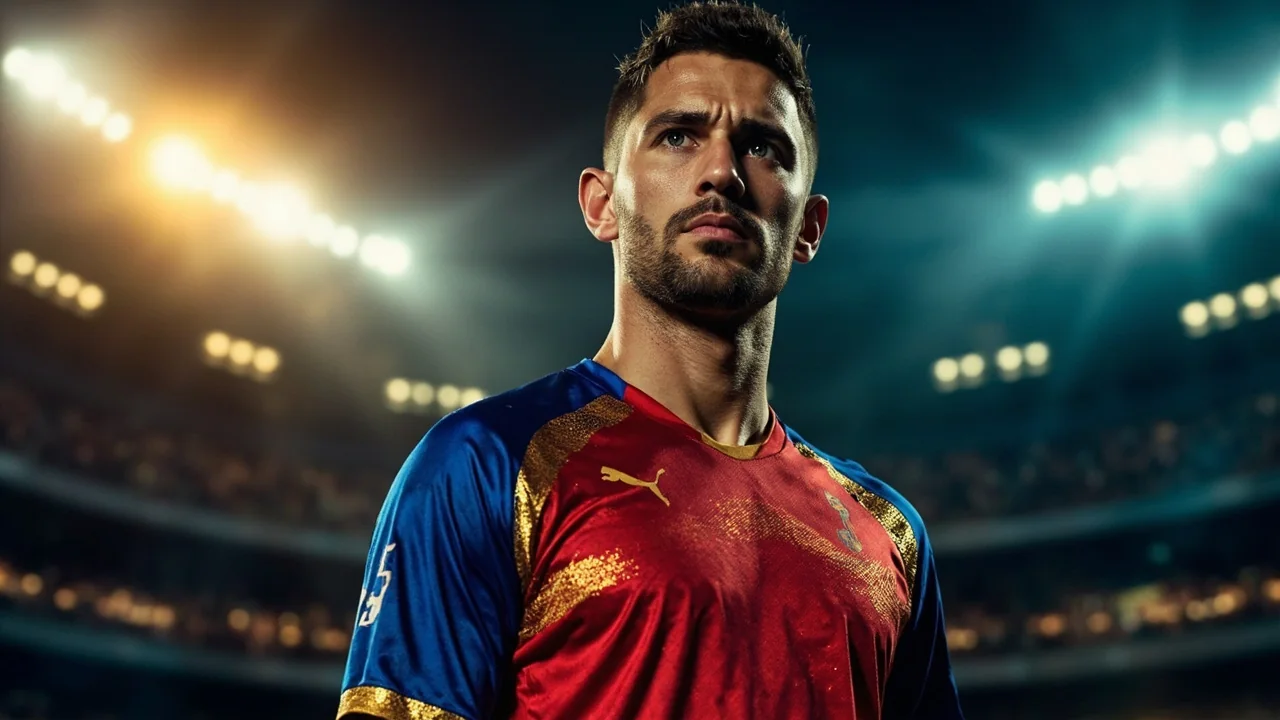
Royal Challengers Bengaluru, fresh off an Indian Premier League title, posted a public note to the Spain national football team after the FIFA World Cup final. The line "The Era of Red, Blue & Gold!" was the centrepiece, a phrase built around the three colours RCB wears at home. The post did three things at once: it praised a competitor, it claimed kinship with another trophy story, and it put a sports-marketing phrase into circulation that can be re-used every time RCB wants to talk about winning.
For fantasy cricket users the post matters less for the result and more for the pattern. IPL franchises have spent the last five years turning their social channels into parallel broadcast outlets. Their posts are designed to be screenshot-friendly, to be re-quoted by opposition fans, and to age well in highlight reels. A line that survives a single news cycle is rare; a line that survives an entire trophy season is a brand asset. RCB's post is engineered to do exactly that.
Why football and cricket have started sharing a vocabulary
The note to Spain is not an isolated gesture. The same playbook is visible when IPL franchises greet Olympic medal winners, when Test nations congratulate T20 World Cup champions, and when football clubs in Europe reply to cricket posts with their own flag emojis. The mutual congratulations serve two functions. First, they signal to a global audience that the league is paying attention to events outside its own calendar. Second, they reach fans who follow more than one sport, which is now the default behaviour for anyone under thirty with a smartphone.
For an IPL franchise, this is a non-trivial audience move. Football dominates the European conversation, the Latin American conversation, and increasingly the Indian youth conversation. A note to Spain is also a note to every Indian teenager who watched the World Cup final until 1 a.m., scrolled Instagram at 1:05 a.m., and saw an IPL brand waiting in their feed. The conversion math is simple: brand memory today is contest sign-up next month.
What "Red, Blue & Gold" tells us about RCB's 2026 identity
The phrase is also an internal message. RCB has spent the better part of two decades defined by the absence of a title. That absence shaped its fan culture, its slogan culture, and its self-deprecating "Ee sala cup namde" arc. After the 2025 trophy, the club needs a new identity that is not built around waiting. "Red, Blue & Gold" gives the marketing team a colour-coded anchor: red and blue are the kit, gold is the trophy.
Read that way, the Spain post is also a tactical message to other IPL franchises. CSK has yellow. MI has blue. KKR has purple. SRH has orange. Every franchise has a colour, but only one of them has just won, and the colour-coded cue is now threaded into a global trophy reference. Fantasy users who watch this closely can map which franchises are leaning into brand-building cycles, which means those franchises are likely to release new merchandise drops, captain promos and limited-edition contest tie-ins. Each of those cycles nudges fan engagement and, indirectly, contest participation.
Three short-term signals fantasy users can actually use
Cricketers treats this kind of moment as a signal, not a stat. The signal lasts roughly two to three weeks before social attention moves elsewhere, so the window for a contest-based reaction is short. Here is what to watch in the days after a high-profile crossover post.
First, look for franchise-led contests. RCB-themed mega contests, captain promos and refer-a-friend bonuses tend to spike around brand milestones. If you already hold a Cricketers account, the post-trophy window is a reasonable time to schedule a low-stakes Rs 1 contest entry with a balanced team, just to test whether the inflated contest pool is worth a multi-entry swing.
Second, watch captain cycles. When a franchise is in a brand-launch phase, its marquee players are more visible in promotional content and more likely to be featured in "lock of the week" previews. That visibility does not change on-field role, but it can shift ownership percentages in mega contests. A 70-percent captain pick is a different captain pick from a 90-percent captain pick, and brand moments shift those numbers.
Third, ignore the noise of cross-sport tactical comparisons. Cricket and football do not transfer tactics well. A football press-high block is not a powerplay field setting. Treat football-related posts as a fan-engagement story and a brand story, never as a cricketing tactic.
A reading list for the rest of the crossover week
Three things are worth tracking after the post. The first is a formal reply from the Spain national team or from La Roja fan accounts. A back-and-forth reply chain amplifies the moment and pushes the original post into algorithm feeds for longer. The second is a domestic counterpart — for example, a BCCI or Indian cricket post that mentions both Spain and the IPL. Cross-sport messaging gains weight when national federations join the thread.
The third is the broadcast signal. If pre-match or mid-innings graphics on the IPL broadcast start quoting the "Red, Blue & Gold" line, the brand has won: the phrase has moved from a social post to an in-stadium asset. That is when fantasy contest promos reach their ceiling, and it is the point at which any contest-window trade based on the moment is fully priced in.
What this is not
It is not a transfer story. No players are involved, no squad list changes, no impact-player combinations are altered. It is not a tournament preview. The post is unrelated to any specific IPL 2026 fixture, opponent or venue. It is also not a sign of a strategic partnership between the IPL and FIFA; national teams and franchises have always exchanged congratulatory notes after global finals.
Cricketers flags this because crossover posts are often re-shared with captions that read as if they were cricket news. They are marketing, not match intelligence. Read them with that frame and the value is clear: they tell you how the franchise wants to be seen, which is useful context but not a contest pick.
A small Cricketers checklist for crossover content
When you see a high-profile crossover post from any IPL franchise, run a four-step filter. Step one: identify the sponsor or partner behind the post. Step two: check whether the franchise has a contest or promo running in the same window. Step three: note which players are tagged in the asset — they will appear in the next wave of captain promos. Step four: revisit your next three contests and decide whether the brand moment justifies a small ownership swing.
That process takes less than five minutes and removes the urge to react to every social-media moment. It also keeps contest selection grounded in role, venue and opposition rather than in a single celebratory post. The full IPL 2026 reading list — auction analysis, captain picks and fantasy strategy notes — sits inside our hub and is updated as franchise cycles move.
Where this leaves the fantasy picture
A congratulatory post does not move fantasy leaderboards. It does, however, reveal how franchises are investing in identity, which in turn shapes the contests you see, the captain promos you receive and the broadcast graphics you watch. IPL 2026 will be the first full season in which the defending champion plays with a brand identity built on a global trophy reference. Watch how that identity carries through to kit launches, fan parks and contest tie-ins. Cross-check it against the role and venue data on the IPL 2026 hub before your next captain decision.
The practical move is to keep a small running note of brand moments per franchise and revisit it once a month. When a moment lines up with a fixture (a home opener, a marquee opponent, a playoff), it becomes a contest-window trade. When it does not, it remains a brand story. That distinction is what separates an informed IPL 2026 reader from a feed scroller.