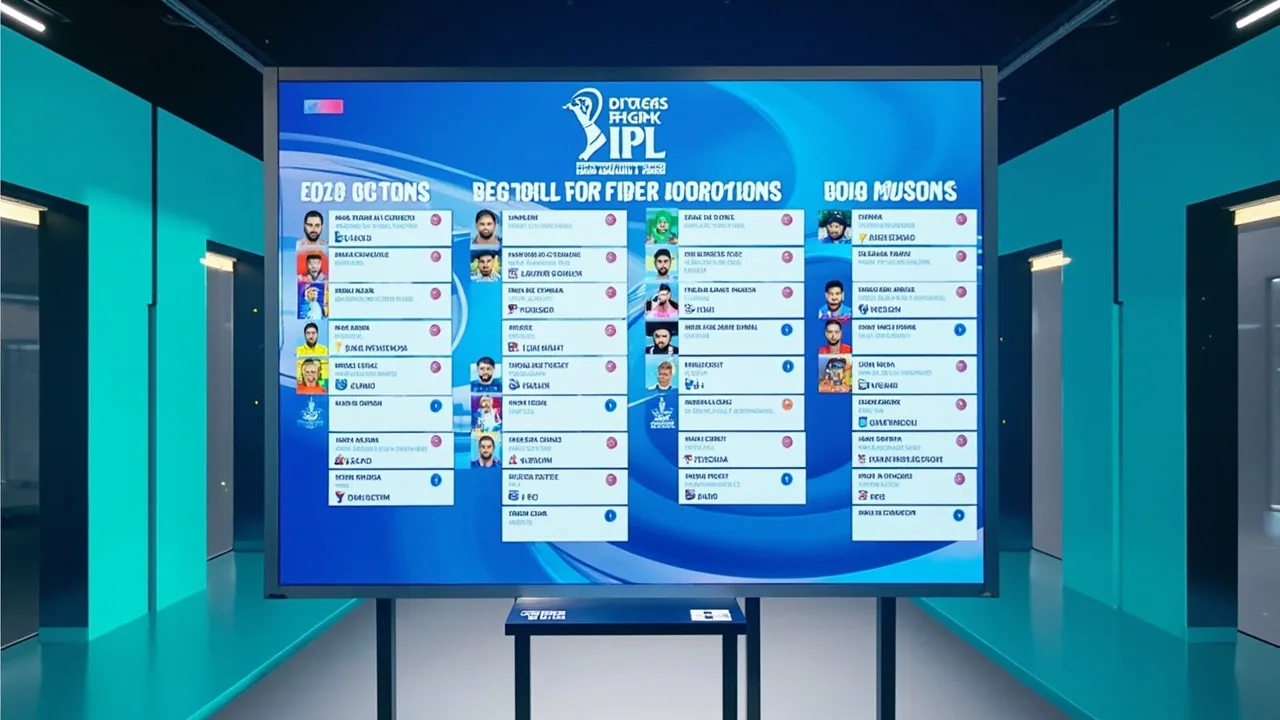
What IPL 2026 mega auction results actually confirm
A result sheet answers three different questions, and separating them prevents most bad fantasy conclusions. First, it confirms the transaction: a player is retained, bought, released, or left unsold. Second, it identifies the squad role the franchise appears to be filling, such as opener, wicketkeeper, death bowler or spin all-rounder. Third, it creates a fantasy hypothesis about opportunity. Only the first question is a fact on auction day; the other two need to be tested against the playing XI, batting order, bowling allocation and venue.
That distinction matters because a high bid is not automatically a high fantasy projection. A franchise can pay for a specialist who plays only when conditions suit, while a modestly priced utility player can become more valuable if the new squad balance gives them four overs and a top-six batting slot. Our tracker therefore treats price as context, not as a ranking of fantasy picks.
How to read the team-by-team IPL 2026 squad changes
Start each team row with the retained core. Mark the captain, primary wicketkeeper, two dependable top-order batters, lead seamer and best spin option. Those names tell you what the coaching group is unlikely to change. Next, place new buys beside the role they can realistically challenge. A new opener is not the same as a reserve batter, and an overseas fast bowler may be competing for one slot rather than adding a permanent second strike option.
The most useful squad summary has four columns: confirmed player movement, likely role, selection risk and fantasy trigger. Selection risk should be labelled low, medium or high instead of being hidden inside confident prose. A low-risk player is part of the preferred XI across conditions; a high-risk player may need an overseas combination, injury replacement or matchup-based selection. This format makes the tracker useful even before the first official playing-XI announcements.

Purse balance can matter more than the headline purchase
Auction coverage often highlights the biggest fee, but remaining purse and squad slots explain what a team can still do. A franchise that spends aggressively on one match-winning batter may have to fill its bench with low-cost domestic options. Another team may spread its budget across a keeper, a powerplay bowler and a finishing all-rounder, creating more routes to a balanced XI. Fantasy users should record both the purchase and the opportunity cost.
A simple balance check is to count the players available for each specialist job after the auction. If a side has only one credible death bowler, that bowler may carry a larger workload but also face injury and matchup risk. If three batters can open, the fantasy ceiling of each depends on the final order. The answer is not to select the most expensive name automatically; it is to wait for role clarity and then compare expected involvement with projected ownership.
Top-order movement and the first fantasy opportunity window
New-ball batters create the quickest fantasy reaction because they can face the most deliveries. When an auction result removes a regular opener, check whether the replacement has opened in domestic T20 cricket, whether the captain prefers a left-right combination and whether the team has a powerplay hitter already. A player who moves from number four to opener can gain volume even if their strike rate remains unchanged.
Do not turn that opportunity into a guaranteed captain pick on auction night. The first match may reveal a different plan, especially when an overseas player or impact substitute changes the combination. Use the result as a shortlist signal, then confirm the toss, announced XI, batting order and recent role before locking a contest team. That two-step process is safer than chasing the auction graphic itself.
All-rounders and bowlers: track overs before reputation
All-rounders can gain or lose fantasy value without changing teams. Their new role may give them two overs instead of four, or push them down the batting order behind a newly purchased finisher. The result tracker should therefore show expected batting position and bowling phase separately. Powerplay overs, middle-over matchups and death overs are different fantasy jobs, with different routes to wickets and economy points.
For bowlers, workload is the central question. A new lead seamer may share the new ball with an established partner, while a spinner may become more valuable at a slow home venue than in away matches. Record the venue, bowling phase and fielding involvement rather than relying on last season's points total. A role-based note remains useful after form changes because it explains why a player is being selected.


Impact Player combinations and selection risk
The Impact Player rule makes a squad result harder to interpret because a player can be central to a match plan without starting every game. Teams may use a batting substitute when chasing or an extra bowler when defending. That creates a difference between being named in the wider squad and having a predictable fantasy floor. The tracker should call out players whose value depends on the match script.
A practical checklist is to ask whether the player contributes in both innings, whether they can replace a specialist without weakening the XI, and whether the captain has used the role consistently. Two-way involvement is generally more stable than a one-dimensional cameo. Until the pattern is visible, treat an Impact Player candidate as a differential rather than a foundation pick.
Turning auction results into a fantasy shortlist
Build the shortlist in layers. Layer one is role security: players who are expected to start and have a defined job. Layer two is opportunity: players whose batting position, overs or fielding responsibility could improve after the auction. Layer three is price and ownership: players who may be overlooked because their auction fee is low or their previous season was quiet. This prevents a single headline from controlling the entire selection process.
Before using any result-based pick, compare recent form, venue history, opponent matchup and announced XI information. The best fantasy decision is usually a combination of signals, not a reaction to a single transfer. Keep a note of the reason for each selection, and review it after the match. That feedback loop improves future choices and helps distinguish a sound process from a lucky outcome.
Our update method for confirmed IPL 2026 auction news
We update this page in three passes. The first pass records only official squad movement and marks unconfirmed reports as pending. The second pass adds role analysis after franchise statements, coach comments or a reliable squad release clarifies the likely combination. The third pass adds fantasy context after the playing XI and match conditions provide evidence. This keeps the news layer separate from the opinion layer.
Readers can use the page as a quick checklist: confirm the player's team, check whether the role is new, review the likely XI, inspect the match venue and then compare expected involvement with contest ownership. For the latest fixtures and squad pages, return to the IPL 2026 hub or browse our fantasy cricket guides. We do not present rumours as completed transactions, and broken or unverified links are not included in the published archive.