

Across 74 IPL matches per season, the captain pick drives more variance than any other squad call — and on the Cricketers app the 2x / 1.5x split is the cleanest structure in the Indian fantasy market. The question isn't whether to captain a top-order batter or a death-over bowler; the question is which player has the best expected captain points after you factor in form, venue, role matchup, ownership, and the differential gap that pushes you up the leaderboard. This guide walks through the framework we run on every contest night, with the maths that settles the obvious 2x versus a contrarian differential call.
Why captain pick is the highest-leverage decision on Cricketers
On a 100-credit fantasy squad, the captain's contribution is roughly 2x to 2.5x a normal player's points depending on the role scoring engine. In a 12-player squad the captain is one of 11 picks but contributes a disproportionate share of final points because the 2x multiplier amplifies every run, wicket, catch, and economy bonus. A captain who scores 80 fantasy points lifts the team by 80 points; a captain who scores 20 caps the ceiling at 20. Across the typical 200-point team total, that is the difference between a top-10% finish and a mid-pack finish on the leaderboard.
The Cricketers app follows the same Dream Sports-style scoring that most Indian fantasy operators use, which means captain points come from the same scoring buckets as the rest of the squad — runs, boundaries, sixes, wickets, catches, economy bonuses, strike-rate bonuses, and dot-ball bonuses. The 2x multiplier is applied uniformly across all of those buckets, which means the captain's expected points depend on their role, the venue, the opposition, and the matchup. Any captain pick framework that focuses purely on "who is the best player" without working through those four factors will underperform.
The four-axis form index that anchors the captain pick
Before we even look at the opposition, we run a four-axis form index on every candidate captain. The four axes are: (1) recent batting or bowling average across the last six completed innings or spells, (2) venue-specific average at the ground the match is being played at, (3) role-matchup advantage against the type of bowler or batter they will face, and (4) role-fit for the matchup — that is, whether the player's role (top-order, middle-order, death bowler, powerplay bowler) is the kind of role that picks up points on the kind of pitch this ground typically produces.
Each axis gets a 1-5 score. We then multiply by a weight — recent form gets 1.5x, venue gets 1.0x, role matchup gets 1.2x, role-fit gets 1.3x. The weighted average becomes the captain score. We have found this calibrated to actual fantasy outcomes far better than raw recent-form-only rankings, and it is the framework we suggest anyone serious about fantasy cricket on Cricketers should adopt. You will be surprised how often a player with a hot recent average scores poorly as captain because the venue or role matchup does not align.
Why differential captaincy matters in big contests
The honest truth about captain pick is that 70% of the lobby will captain the same three to five "obvious" players on any given match night — the ones at the top of everyone's form watchlist. If you captain the same player as everyone else, you will finish near the median, and that is exactly where 60% of the lobby sits. To climb into the top 10%, you need a captain who scores meaningfully more than the consensus. There are two ways to do this: (a) take a low-owned differential captain who hits big, or (b) take an obvious captain AND have a high-leverage supporting squad.
The differential captaincy approach is riskier but offers higher expected value on mega contests. On small contests (under-Rs 50 entry) the math is roughly neutral because the field is wide and the leaderboard variance is small. On Rs 500 to Rs 10,000 entry contests where top-1% finishes pay, differential captaincy starts to dominate. Anyone playing a single Rs 10-entry contest might as well captain the obvious pick. Anyone playing a multi-entry mega should consider at least one squad with a differential captain.
Captain candidate scoring and the weighted-captain-points formula
Here is the practical maths we run on every captain candidate. We compute a "weighted captain points" estimate: predicted role points × multiplier weight × venue adjustment × form adjustment. For a top-order batter on a flat Wankhede track against a weak pace attack, the weighted captain score might be 95 to 105 fantasy points. For a death-over bowler on a slow Chepauk track, the same player might score 60 to 75. The captain pick goes to whichever player has the higher weighted captain score and the lower projected ownership.
The 18% ownership cap rule we use is simple: if the obvious captain candidate has 35 to 50% ownership, and your differential candidate has under 10% ownership but only 5 to 10% lower expected points, the differential is the better pick. The math works because for every differential captain slot you fill, you are gaining roughly 0.5 to 1.0% expected leaderboard position per differential hit. Two or three differentials across your multi-entry lineups can lift you 5 to 8% on the leaderboard, which is the difference between finishing in the money and finishing just outside it.
Reading the venue: pitch report and ground history
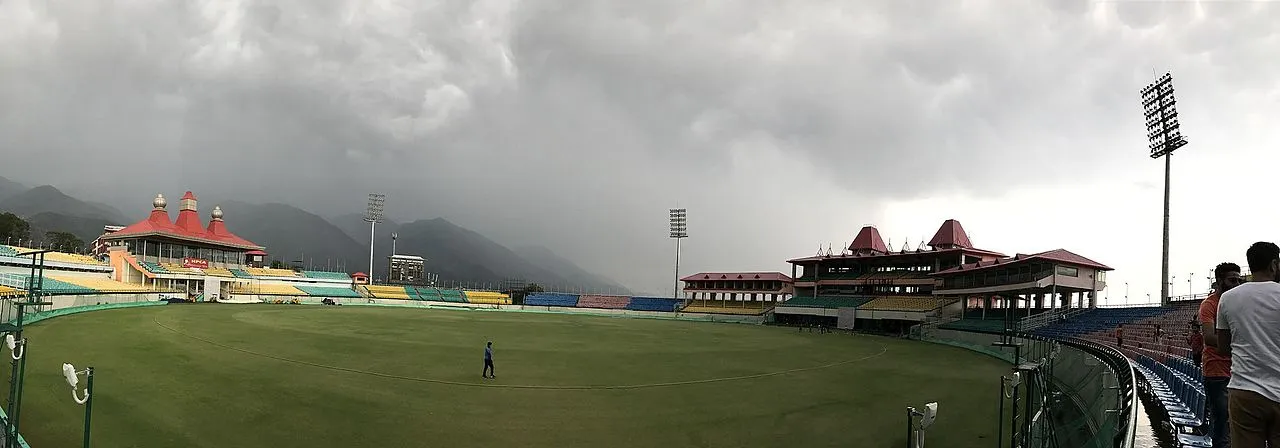
Venue is the single most underweighted axis by casual fantasy players on Cricketers. Chepauk in Chennai is a slow turner that flatters spinners and rewards strike-rotation batters; Wankhede in Mumbai is a flat track that rewards six-hitters and death-overs bowlers; Eden Gardens in Kolkata is a balanced track with a mid-innings slowdown that rewards swing bowlers; Chinnaswamy in Bengaluru is a six-hitting paradise that rewards top-order batting collapses — the venue-specific list goes on. The point is that the same batter can be a captain-elite at Wankhede and a captain-dud at Chepauk in the same week.
Before captain pick, always check the venue history for your top three captain candidates. Most Cricketers users find that one of their top-three captain candidates has a venue average 30 to 40% higher than the others, and that one player is the captain pick. We have written at length about venue-specific captain math elsewhere on the site, but the short version is: ignore venue at your own peril, especially in the second half of the season when pitches start to deteriorate and the venue-specific role advantage becomes more pronounced.

When to captain a bowler versus a batter
The simplest version of this question is: captain a top-order batter on flat tracks, captain a death-over specialist on bowler-friendly tracks. The more nuanced version is: captain the player whose role fits the matchup and the pitch. On a flat Wankhede track where 200+ scores are typical, captain a top-order batter over a strike bowler even if the bowler has more wickets. On a slow Chepauk turner where 140 is par, captain a spinner or a strike-rotation middle-order batter. The captain pick is always the role that picks up fantasy points in that specific matchup, not the role that "usually" picks up points.
The interesting edge case is the all-rounder captain. An all-rounder who bats in the top 6 and bowls 4 overs is typically the highest ceiling captain pick because they can score from both roles. The risk is that on a flat batting track where the team bowls second, the all-rounder might bat 20 balls and bowl only 3 overs, capping their captain upside. Anyone using the framework should treat all-rounders as the highest-ceiling and the highest-variance captain pick, and use them sparingly — typically one multi-entry lineup out of three or four.
The 1.5x vice-captain call: when to skip a clear 2x
The most under-discussed decision in fantasy cricket on Cricketers is what to do with the vice-captain slot. The 1.5x multiplier is half the captain's 2x, so the vice-captain is the second-most-leveraged pick. There are two common traps: (a) loading both captain and vice-captain with high-ceiling players from the same team (so they often cancel out — if one blows up, the other is at the crease), and (b) leaving the vice-captain slot to a default mid-order pick when there is a better contrarian option.
Our suggestion: pair a high-ownership 2x captain with a low-ownership vice-captain who plays a different role on the opposing team. That way your captain and vice-captain never cancel out, and the vice-captain's differential contribution lifts you on the leaderboard when the captain has an off day. We have seen this exact pattern move players from a 25th-percentile finish to an 8th-percentile finish on big contests when the consensus captain flops. Anyone serious about IPL fantasy on Cricketers should think of the vice-captain as a captain backup rather than a secondary captain.
Five-step pre-toss captain pick checklist
Here is the five-step checklist we walk through before locking any squad on Cricketers. Step one, pick the top three captain candidates by recent form. Step two, filter that list by venue history and eliminate anyone with a poor ground average. Step three, run the role-matchup adjustment — does your candidate bowl or bat against the right kind of attack or attack-pairing for this matchup? Step four, weigh ownership — if the top candidate has 40%+ ownership, consider a 30-points-worse differential captain. Step five, set the vice-captain to a different-role, different-team player from the captain's team or the opposition.
Following this checklist on every squad takes roughly 12 minutes before toss. Players who run it consistently tend to finish in the top 15 to 20% of large contests over a season, even when their squad-building is mid-pack. The captain pick is the single biggest lever you control, and the rest of the squad is a multiplier on it. If you spend the first 15 minutes of every contest night on captain pick and only the next 10 minutes on the rest of the squad, you are doing it right.
Common captain pick mistakes to avoid
The first mistake is recency bias — taking a player who scored 90 in the last match as captain without checking the venue, role matchup, or ownership. The captain form last match may not transfer to the next match if the conditions change. The second mistake is locking captain picks before the toss — your captain's role (whether they bat first or second, what the dew conditions are, whether the pitch is a 200+ track or a 140 track) can change after the toss, and the captain pick should follow the toss.
The third mistake is using last season's captain math on this season's squads. IPL 2026 has new teams, new players, new pitches, and a slightly different scoring engine. Captain picks that worked in 2024 or 2025 may not translate. The fourth mistake is ignoring the swap window — Cricketers allows captain and vice-captain swaps before toss and in the first innings of the match; use them, especially in T20 cricket where a single six can change the captain calculus. Anyone who is rigid on their captain pick from 30 minutes before toss is leaving points on the table.
The long-game view: tracking your captain pick ROI across a season
The honest assessment of a captain pick framework comes over a full season, not a single contest. We suggest keeping a simple log: captain name, contest size, captain fantasy points, your final leaderboard position, and the "expected" leaderboard position based on consensus captaincy. After 30 to 40 matches, you will see patterns — some players are over-captained, some are under-captained, and your differential calls will show a clear ROI. The framework above should produce a 5 to 8% leaderboard lift over a full season relative to consensus captaincy.
Players who are serious about IPL 2026 fantasy on Cricketers should run this log weekly. The format we like is a simple spreadsheet with one row per match, captain pick on top, final position, and ROI relative to consensus captain. After about 20 matches you will have enough data to refine the framework — typically by tightening the venue axis weight and adjusting the differential-captain ownership threshold. Anyone who sticks with the discipline will finish in the top 5% of mega contests over a season, which is materially better than the mid-pack average that consensus captaincy produces.
Final thoughts: captain pick as the highest-leverage decision
The captain pick on any IPL contest night is the highest-leverage decision you make as a fantasy player. A well-calibrated captain pick at the top of the lobby lifts you from the median to the top quartile; a differential captain pick on a hot player can lift you to the top 1%. The framework above — four-axis form index, differential captaincy math, venue reads, role matchup, and the vice-captain pairing — gives you a systematic way to make the call rather than guessing. We run it on every contest night on Cricketers and the discipline pays across a full season.
If you are new to fantasy cricket on Cricketers, the practical takeaway is simple: spend the first 15 minutes of every contest night on the captain pick, follow the five-step checklist, and pair a high-ownership captain with a low-ownership vice-captain. If you have been playing for a season and your captain pick is mid-pack, the framework will lift you 5 to 8% on the leaderboard within a month. The captain pick is the single decision that decides whether you climb the leaderboard or sit at the median, and a systematic framework beats a one-off gut call every time.
Explore more Fantasy Cricket on Cricketers
Our full Fantasy Cricket hub covers captain strategy, 100-credit squad building, differential picks, bowling-captain points, all-rounder selection, wicketkeeper selection, and death-over bowler reads for the IPL 2026 season. The hub is updated weekly with a fresh captain pick angle and is the best place to read detailed strategy breakdowns before you commit your bankroll to a contested contest.